Spotify Royalties and the 1,000-Stream Rule

Spotify does not pay a fixed rate per stream. It calculates recorded music royalties through streamshare and pays the selected rightsholder. Since April 2024, each recording generally needs 1,000 global streams in the previous 12 months, plus an undisclosed minimum of unique listeners, to enter that month's recorded royalty pool.
Lead visual
The royalty waterfall
Spotify revenue pool
Subscriptions + ads
Streamshare
Your share of listening
Rightsholder payment
Distributor or label
Artist net
Fees, splits, recoupment
Deduction
Distributor fee
Deduction
Collaborator splits
Deduction
Recoupable costs
Key takeaways
- Spotify pays by streamshare, not a price attached to each play.
- The 1,000-stream threshold applies to each recording's access to the recorded music royalty pool, not publishing royalties.
- Spotify also requires a minimum number of unique listeners but does not publish that number.
- Eligibility is recalculated monthly, and an eligible month does not make earlier streams payable.
- Spotify for Artists is an estimate. Use the distributor or label statement to verify reported money.
How does Spotify calculate recorded music royalties?
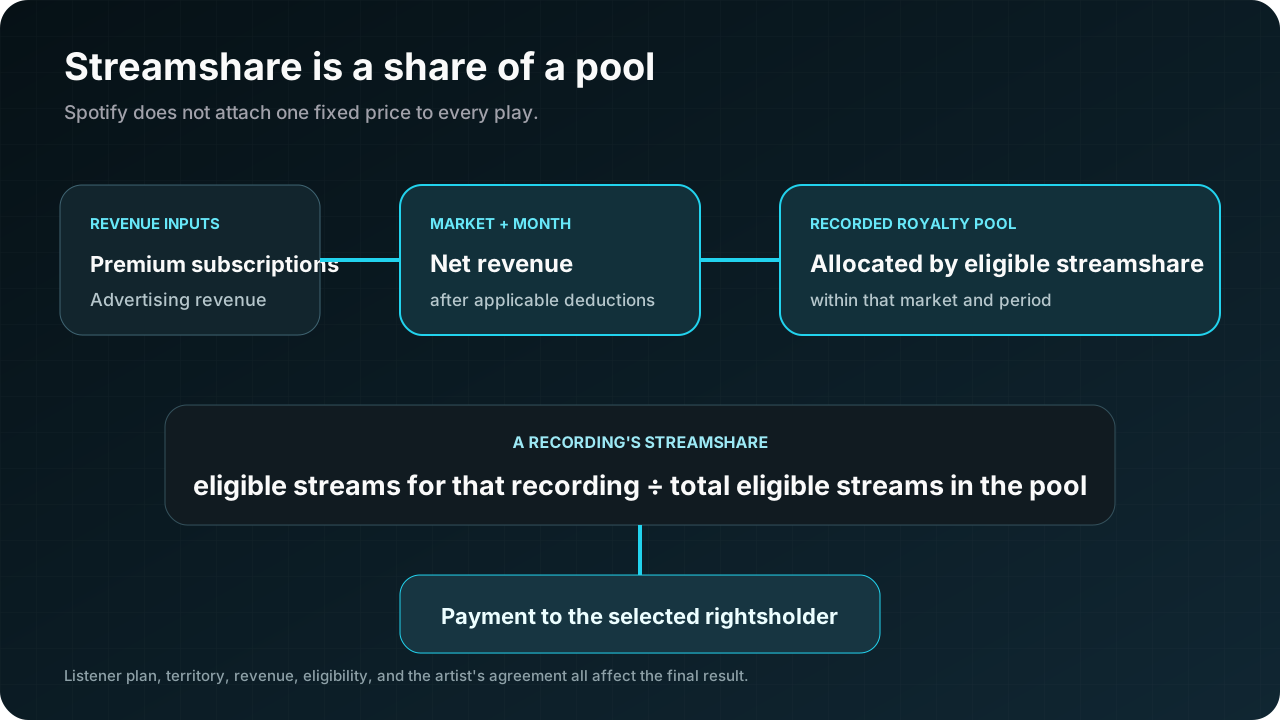
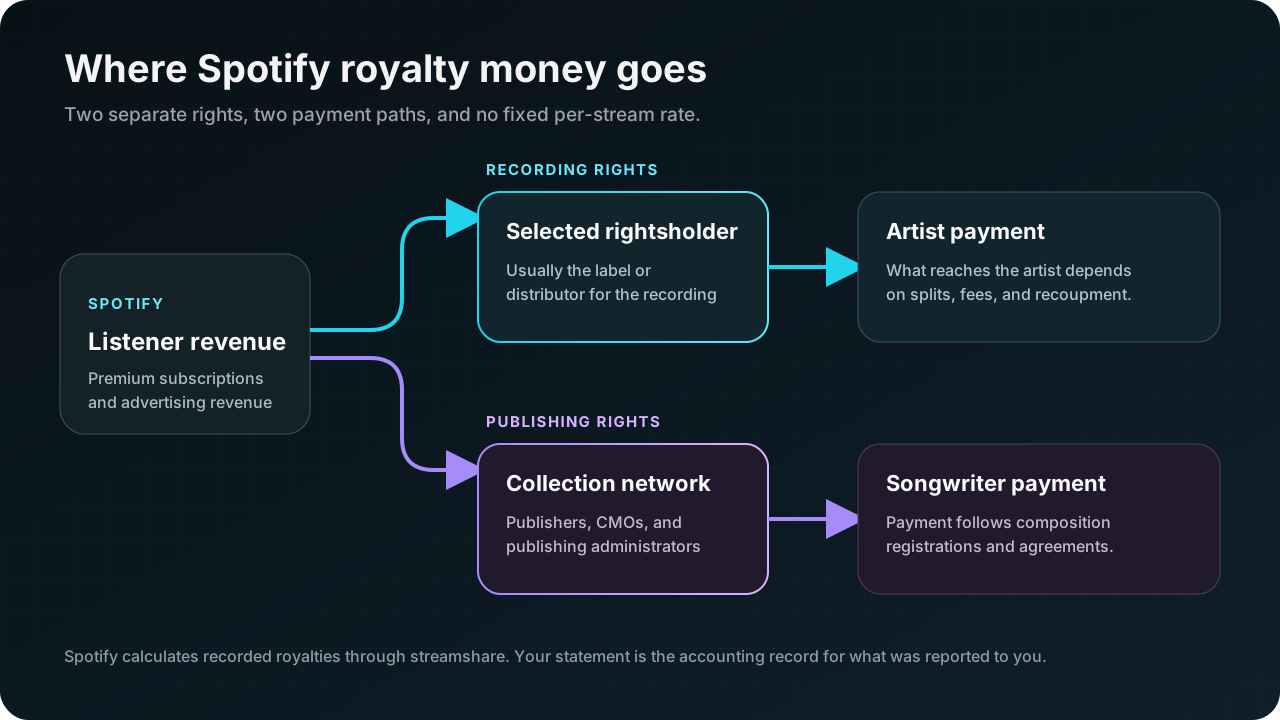
Spotify pools subscription and advertising revenue, then allocates recorded music royalties according to streamshare in each market. The selected rightsholder, usually a label or distributor, receives the payment and accounts to the artist under their agreement. That is why two artists cannot safely multiply streams by one universal rate and expect the same result.
| Spotify-side question | Artist-side question | |
|---|---|---|
| Eligibility | Did the recording enter the pool? | Is the correct ISRC being reviewed? |
| Allocation | What was its streamshare? | Which period and territory are on the statement? |
| Recipient | Which rightsholder was selected? | Which label or distributor received it? |
| Net payment | What did Spotify report? | What splits, fees, or recoupment does the agreement apply? |
How can your agreement change the artist payment?
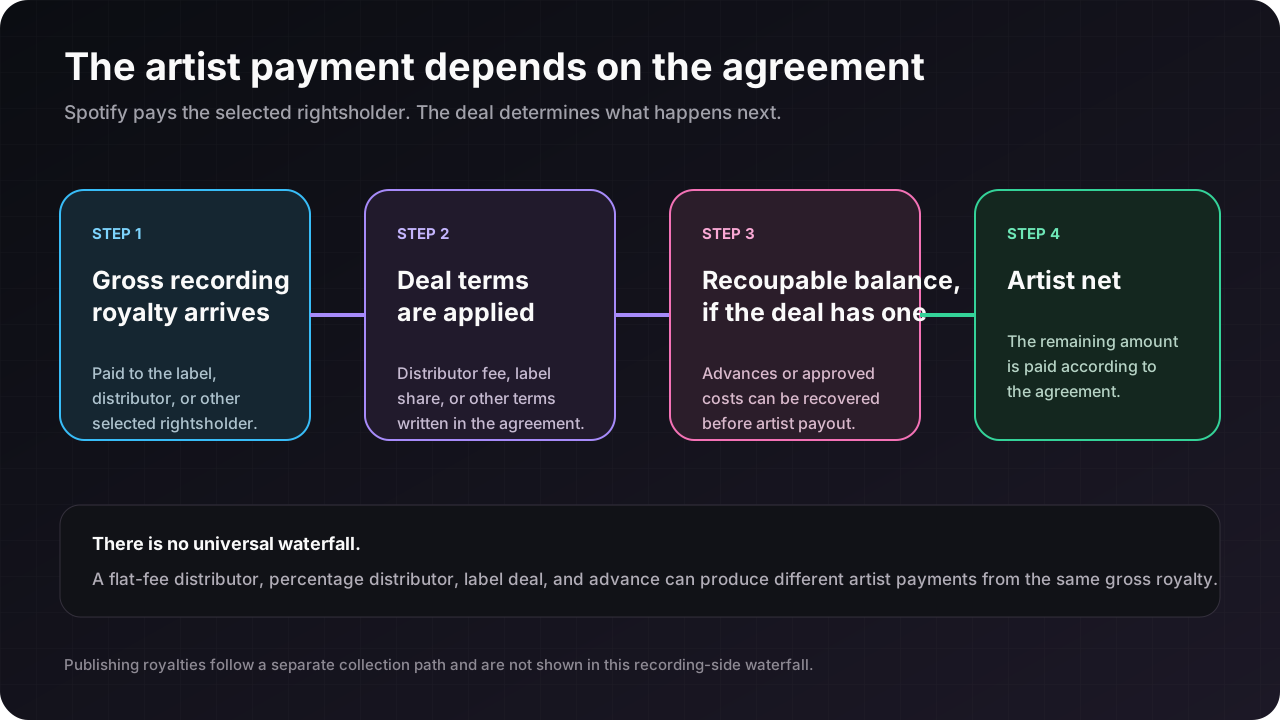
After the rightsholder receives the recording royalty, the artist’s agreement controls the next calculation. A distributor fee, label share, or recoupable balance can change the artist net. The exact order and deductions belong to the deal, so check the statement against the signed agreement. The recoupment guide owns the full explanation.
What exactly is Spotify's 1,000-stream rule?
Since April 2024, a recording must have at least 1,000 global streams during the previous 12 months to be included in Spotify's recorded music royalty pool for the month. It must also meet an undisclosed minimum of unique listeners. Spotify recalculates eligibility every month, so a recording can move into or out of the pool.
Once the recording is eligible for a month, all of its streams in that eligible month count toward the royalty calculation. Streams from an earlier ineligible month do not become payable later. The rule does not alter publishing royalties, and crossing the threshold does not guarantee a particular dollar amount.
Treat each recording separately
Spotify says qualification normally applies to each unique recording, technically each ISRC. Do not combine the counts for an original, remix, live version, and rerecording unless Spotify has actually categorized them together.
How should you verify eligibility and payment?
Check the recording's last-12-month stream count in Spotify for Artists, confirm that you are looking at the correct ISRC, and note whether the rolling count is close to the threshold. Then wait for the matching sales period in your royalty statement. Spotify calls the artist-dashboard figure an estimate, not a guarantee.
If the statement shows no recorded royalty, ask the distributor to confirm the ISRC, sales period, eligibility status, and any withheld or adjusted activity. Keep composition registrations in a separate checklist because publishing royalties follow a different path.
Where do the Spotify royalty rules come from?
Frequently asked questions
Does Spotify pay a fixed amount for every stream?+
No. Spotify says royalties are based on streamshare, not a fixed per-stream rate. Revenue, listening, territory, and the rightsholder agreement all affect the result. A calculator can model a range, but your distributor or label statement is the accounting record for what was reported and paid to you.
Does the 1,000-stream rule apply to publishing royalties?+
No. Spotify says the track monetization threshold applies to the recorded music royalty pool. It does not change Spotify's publishing royalty calculations. Songwriters still need the correct composition registrations and collection mandates for the publishing side.
Do streams before a track becomes eligible get paid later?+
No. Spotify's example says that if a track has 750 streams in one month and 500 in the next, all 500 streams in the eligible second month count. The earlier 750 are not paid retroactively. Eligibility is recalculated monthly from the previous 12 months.
Does each version of a song need 1,000 streams?+
Generally, yes. Spotify assesses each unique recording separately, technically by ISRC, though it says rare cases may be categorized differently. A remix, live version, or rerecording with its own ISRC should not be assumed to inherit another recording's eligibility.
How can I confirm that a track is monetizing?+
Use Spotify for Artists as an estimate, then confirm the result in your distributor or label royalty statement. Spotify warns that its last-12-months stream data is not a guarantee of eligibility. The statement is the better source for whether recorded royalties were actually reported.

Get better release strategy in your inbox
Release planning checklists, royalty explainers, and artist strategy notes from Velveteen. No daily noise.
Was this useful? Send a signal or flag a correction.
Keep reading
Related guide
How streaming royalties work
The pro-rata pool model, plainly: net revenue, streamshare, and why two songs with the same play count can earn different amounts.
Related guide
Recoupment explained
What recoupment is, how advances and recoupable costs net against royalties, and when you're finally in the black.
Related guide
Read your statement
A field-by-field workflow for reporting lag, negative adjustments, and reconciliation between settled distributor sales and directional artist analytics.
Related guide
Streams to make $1,000
A planning model for $1,000 gross using a $0.004 assumption, plus the effect of splits, fees, recoupment, and Spotify's eligibility rules.
Run your own streaming math
Plug in your streams and a payout range to see gross revenue, your share after the distributor fee and splits, and how many streams it takes to recoup a budget.